

Predator Free Ōkārito

Thanks to the amazing mahi (work) of ZIP (Zero Invasive Predators,) through the Predator Free South Westland project, beautiful Ōkārito is now full of native bird song, fruit and flowers than ever before!
It is now five years since this project started back in 2021 in Ōkarito, Tai Poutini National Park South Westland New Zealand, and (in our expert opinion!) as guides and also long-term residents of this amazing community, it is outstanding the results (ZIP) have achieved in a short amount of time.

On our Ōkarito Nature Tour, we are literally tripping over south Island Robin who are bouncing around on the ground at our feet, pecking at legs and trying to eat shoelaces (do they think they are worms maybe?), dodging Tui & Kereru diving through the canopy. Our guides often need to stop talking mid-sentance due to the loud birdsong of Korimako /bellbirds and Tui, and being upstaged by multiple piwakawaka/fantails entertaining clients - flittering around them & talking with their squeeky chatter, like something out of a Disney movie.
(Actually, Cliff once took a family out to the beach and wowed them by asking their young daughter if she wanted to be a Disney Princess? And proceeded to walk them down the Ōkarito 'airstrip' followed by many fantails, just like a Disney princess.)
Methods & Technology
I digress! Back to ZIP!
Using a 'block by block' approach, they are successfully removing possums, rats & stoats and preventing their return to this UNESCO World Heritage area, Rowi Kiwi sanctuary and home to 76 bird species.
They use state of the art technology - they developed some of their own technology, including AI cameras to detect stoats/rats etc, plus targeted aerial operations, high-tech traps & bait stations, plus using the natural features of Whataroa & Waiau/Waiho rivers, the Southern Alps, and the Tasman Sea as boundaries, which create their own protection & help prevent reinvasion. It's a very strategic approach that has they have proven works - they now need to 'hold the line', so to speak.
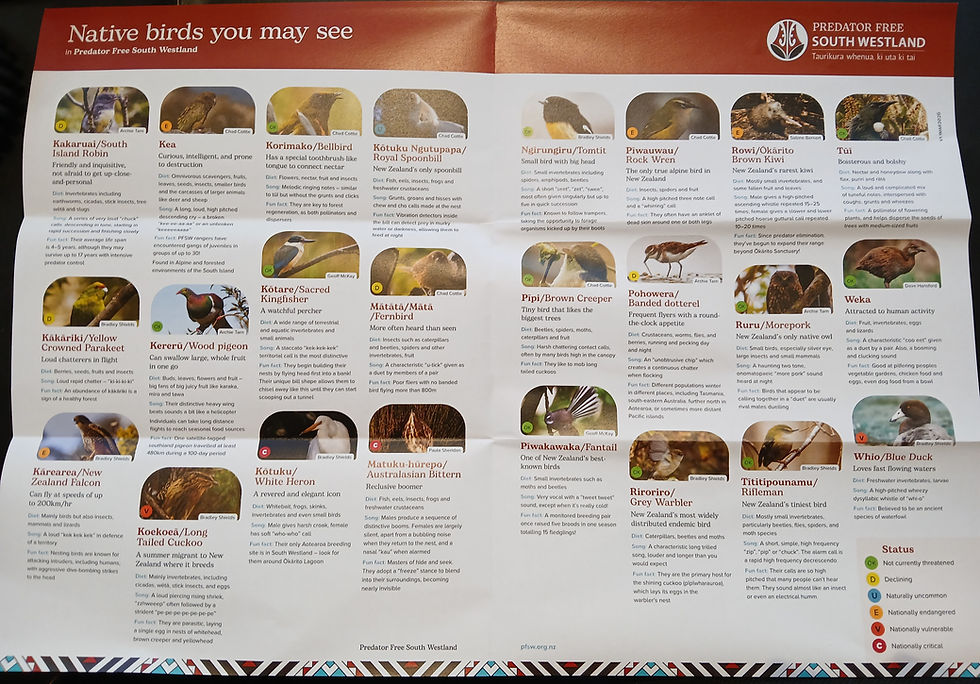

Birds we used to call 'elusive' like the Matata/fernbirds, once a rarity to hear and if you saw one wow! Are now abundant and the chicks over the years have now learnt not to be so shy and scared - the absence of predators has changed their natural behaviour perhaps??

Benefit to Plants
And lets talk plants! We have never seen so many native tree fruit & seed on the ground (normally this is great food for the predators) - huge miro berries, totara & rimu fruit - these are our big trees and they will regrow to enhance this temperate rainforest even more. Also give our birds more good food to eat, we have seen robins eating these off the ground which we haven't ever seen before.

Kiekie Flowers
These huge white flowers are also now back - we can't say in our 20 years plus on the Coast we have ever seen these before now, as the rats absolutely loved to eat them.

Nate St Claire from ZIP was recently interviewed on Conservation Amplified - a people helping nature podcast - you can listen on Spotify or direct 'How South Westland Became a Massive Nature Sanctuary'.
For more information about ZIP and Predator Free South Westland visit zip.org.nz or pfsw.org.nz or check out their instagram page for amazing bird photos @projectpfsw
So plan your tour to Ōkarito soon! You won't be dissappointed and there are plenty of free & other paid nature based activities in Ōkarito, Whataroa & Franz Josef to keep you busy, whether you are a solo backpacker, couple or travelling with kids.
Activity ideas
There are also plenty of free walks www.glaciercountry.co.nz or www.doc.govt.nz


Comments